
June 25, 2026
Thinking about buying a bungalow to renovate in Seminole Heights or Tampa Heights? It can be an exciting way to create a home with real character, but it can also bring more moving parts than a typical purchase. If you want to protect your budget, understand historic review, and make smarter decisions before you close, this guide will help you know what to look for. Let’s dive in.
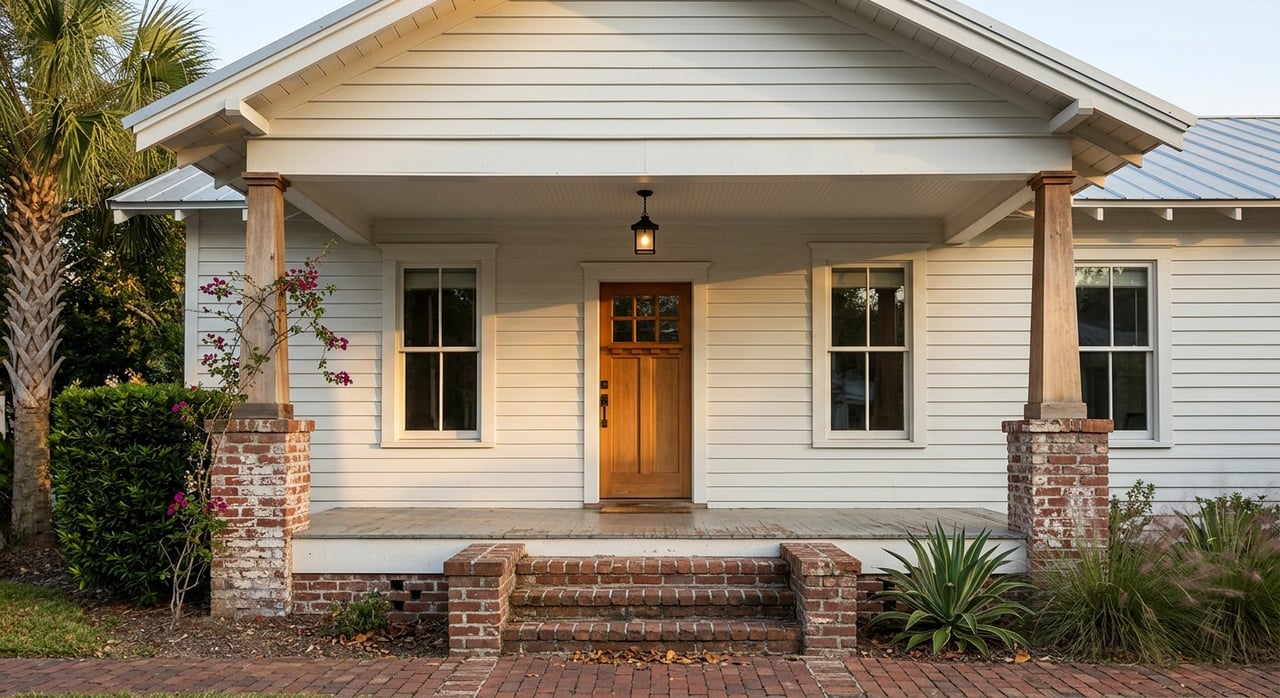
Seminole Heights is known for its early-20th-century bungalow character. According to the City of Tampa, many homes reflect Florida Vernacular influences, with porch-forward designs, steep gables, rectangular shapes, and short brick piers.
Tampa Heights has a more mixed housing stock, but bungalows and wood-frame vernacular homes from roughly 1910 to 1925 are still a major part of its identity. The city’s historic district guidelines note that about 62% of structures in the district contribute to its historic character, while about 38% do not, which means two homes on the same street may not have the same review considerations.
A bungalow renovation is rarely just about paint, flooring, and fixtures. In Seminole Heights and Tampa Heights, the details that give these homes their charm are often the same details the city expects owners to preserve.
You may see porch columns or piers, layered rooflines, decorative trim, exposed beams or rafters, divided-light openings, built-in millwork, and prominent chimneys. Those features can add beauty and value, but they can also raise the cost and complexity of renovation work.
One of the biggest mistakes buyers make is assuming every bungalow follows the same layout. The City of Tampa notes that many plans came from catalog books, which helps explain why floor plans vary so much from one house to another.
That means you should budget based on the actual house you are buying, not on a general idea of what a bungalow renovation should cost. Room flow, wall locations, porch condition, and upper-level configurations can all change your numbers.
Before you get attached to a renovation vision, confirm the property’s historic status. In Seminole Heights and Tampa Heights, new construction and additions require a Certificate of Appropriateness through Tampa’s Architectural Review Commission.
The city says the ARC looks closely at scale, massing, setbacks, orientation, materials, trim, window rhythm, entrances, porches, roof shape, and compatibility with the surrounding block. If your plan changes those visible features, review may become a major part of your timeline.
Do not assume every home in these neighborhoods is treated the same. Tampa Heights, in particular, includes both contributing and non-contributing structures, so preservation expectations can vary by parcel.
That is why a house-by-house review matters. A quick impression from the street is not enough when your renovation budget and design choices may depend on official status.
City permit approval does not replace private due diligence. Tampa states that permit review does not check private deed restrictions or covenants.
For you as a buyer, that means a building permit is not a substitute for a survey, title review, or covenant review. In older neighborhoods, private restrictions may limit exterior changes even if city code would otherwise allow them.
Flood review should happen before your offer is firm, not after. Tampa says flood zones appear on FEMA flood insurance rate maps, while local city and county flood maps may also show flooding concerns that do not appear on FEMA maps.
The city also warns buyers not to confuse flood zones with hurricane evacuation zones. That distinction matters because they measure different risks and can affect planning in different ways.
Tampa states that homeowners insurance does not cover flood damage, so separate flood coverage may be needed. That can affect your monthly carrying cost from day one.
There is also a major renovation risk tied to the city’s substantial-improvement rule. If a property in a Special Flood Hazard Area is improved or repaired above the 50% threshold, it may need to meet current flood-resistant standards, including elevation above base flood elevation.
For a renovation buyer, that can change the budget dramatically. A project that looks manageable on paper can become much more expensive once the scope crosses that threshold.
In these neighborhoods, the renovation categories most closely tied to preservation are roofs, windows, porches, siding, and woodwork. Seminole Heights guidelines discourage changing window size or pane patterns, replacing sound wood sash with metal sash, or removing original porch supports and ornamentation.
Tampa Heights guidelines also emphasize preserving porch supports, railings, beams, rafter details, and other woodwork. When extra space is needed, the guidance recommends placing additions at the rear of the home when possible.
What looks like a simple exterior update can turn into a larger process. If the work touches historically important materials or visible architectural elements, review and permitting may become more involved.
The city’s residential permit process can cover remodeling, additions, roofing, siding and stucco, shutters and awnings, electrical, plumbing, mechanical work, and foundation stabilization. Inspections may include multiple rough-in and final approvals.
Older houses often come with hidden conditions behind walls, under floors, and inside crawlspaces or attics. Once work begins, concealed electrical, plumbing, gas, and mechanical systems may need testing and approval before they can be covered again.
That is one reason renovation budgets can expand quickly. The visible finishes are only part of the story in a century-old home.
If you are buying an older bungalow, environmental testing should be part of your due diligence and renovation budget. The EPA states that homes built before 1978 are more likely to contain lead-based paint, and renovation work can create dangerous lead dust.
The EPA also reports that 87% of homes built before 1940 and 24% of homes built between 1960 and 1978 contain some lead-based paint. For homes where materials may be disturbed during renovation, suspect asbestos-containing materials should be sampled by a trained and accredited professional.
A smart bungalow purchase usually starts with the right professionals before the plans are finalized. The most helpful team often includes an inspector who understands older homes, a contractor who can price permit-heavy work, and a design professional familiar with ARC review.
This early planning can help you separate cosmetic ideas from structural realities. It can also help you understand what is feasible before you commit to a number that looks good but does not reflect the full scope.
One practical way to evaluate a renovation property is to separate your budget into three layers:
This approach can give you a clearer picture of risk. In neighborhoods where visible character matters, preserving the exterior while modernizing the systems behind the walls is often where the real planning happens.
For some buyers, an accessory dwelling unit may be part of the long-term plan. The City of Tampa says ADUs are allowed in Seminole Heights and the Tampa Heights Overlay, but the main residence must be owner-occupied and other development rules still apply.
That means an ADU may be a useful option if you plan to live in the property. It is not a simple workaround for a fully passive investment strategy.
Tampa offers certain historic-preservation incentives that can affect the economics of a project. The city says its ad valorem tax exemption applies to local landmarks and contributing properties in local historic districts.
The city also maintains a Trust Fund Loan Program for eligible historic properties in the National Register Historic Districts of Tampa Heights, Ybor City, and West Tampa. If you are comparing renovation opportunities, those programs may be worth exploring early in the process.
If you are buying a bungalow to renovate, the goal is not just finding charm. The goal is finding a property where your renovation vision, budget, and approval path actually line up.
A strong buying strategy usually means verifying historic status, reviewing flood exposure, checking title and restrictions, and evaluating the house’s real condition before you finalize your numbers. In these neighborhoods, the best opportunities often come from clear due diligence, not just a good first impression.
When you want local guidance on buying, valuing, or evaluating renovation potential in Greater Tampa Bay, connect with Track Ventures LLC d/b/a Rand Wilson Group. Their boutique, advisory-driven approach can help you move forward with more clarity and confidence.
Stay up to date on the latest real estate trends.
We are committed to guiding you every step of the way—whether you're buying a home, selling a property, or securing a mortgage. Whatever your needs, I've got you covered.

Rand Wilson Group
1905 Market Street #12, Tampa, FL 33602